For many families, the search for the right school comes down to a simple worry: will my child actually be seen here? Small classes are one of the most reliable answers to that question.
When a classroom holds ten students instead of thirty, attention becomes personal and participation becomes expected. It gets much harder for a student to fade into the background, and for students who focus and learn in their own way, that shift can change everything.
This article looks at why class size matters so much for attention and engagement, what actually changes in a smaller room, and how City School of Nashville turns small classes into deeper learning for students in grades 5 through 12.
Quick Summary
- Small classes increase the amount of individual attention, feedback, and participation each student receives.
- Fewer students in a room reduces distraction and makes it easier for students who focus differently to stay engaged.
- Families searching for schools for ADHD near me are often looking for a smaller, more supportive setting rather than a clinical program.
- City School keeps classes to an average of about ten students and pairs that with advisory relationships and hands-on learning.
- Class size is powerful, but it works best alongside strong relationships, project-based learning, and real-world fieldwork.
Why Class Size Shapes Attention and Engagement
Attention Is Shaped by Environment
Attention isn't simply a trait a student has or lacks. It's shaped by the environment around them.
In a large class, a teacher has to spend energy managing the group, which leaves less time for any one student. Instructions get repeated, transitions take longer, and the quiet middle of the room is easy to overlook.
A smaller class flips that math. With fewer students, a teacher can notice when someone is lost, adjust in the moment, and check for understanding before moving on.
Research on class size consistently points to more individualized attention and stronger engagement in smaller groups. This is especially true for students who need a little more back-and-forth to stay connected to the lesson.
When Participation Is No Longer Optional
Engagement grows when participation stops being optional. In a room of ten, every voice matters and every student is expected to contribute.
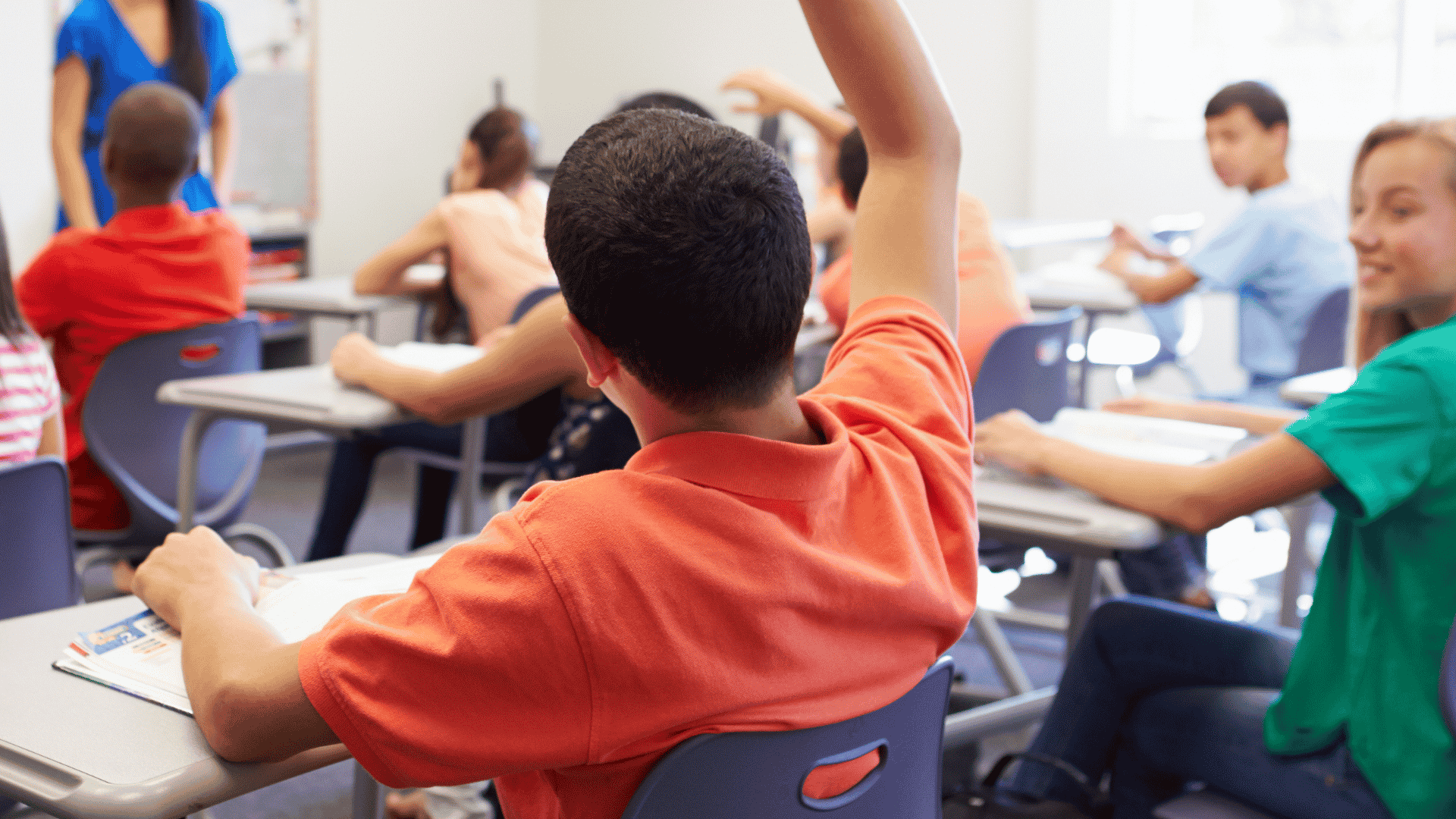
Picture the same student in two different rooms. In a class of thirty, they can raise a hand three times and never get called on, then drift off during a long stretch of lecture.
In a class of ten, that same student is part of the conversation within minutes and can't disappear even if they try. The student didn't change. The room did.
What Smaller Classes Change Day to Day
The benefits of small classes aren't abstract. They show up in the ordinary moments of a school day.
Everyday Moments Add Up
A student who is confused can ask a question without feeling like they're holding up a crowd. A teacher who knows the room can tell the difference between a student who is stuck and one who is simply having a hard day.
Faster, More Useful Feedback
Feedback becomes faster and more useful in a smaller class. Instead of waiting days for a graded stack of papers, students often get comments while the work is still fresh.
That quick loop helps them correct course, build confidence, and take ownership of their progress.
Room for Real Relationships
Just as important, smaller classes make space for relationships. When teachers and students know each other well, trust grows.
Trust is what makes a student willing to take a risk, admit confusion, or try again after a setback.
Supporting Students Who Focus and Learn Differently
When a Crowded Room Gets in the Way
Some students find a traditional, crowded classroom especially difficult. A student with ADHD, for example, may have a mind full of ideas and energy that a large lecture setting struggles to channel.
The issue is rarely ability. It's environment.
What Families Are Really Searching For
This is often what families are really after when they search for schools for ADHD near me or a school that will help their child focus. They aren't necessarily looking for a clinical or special-education program.
Many are looking for a smaller, calmer, more responsive setting where their child is known. They want a day that includes movement, hands-on work, and room to breathe.
How a Smaller Room Helps
Smaller classes help here in concrete ways. Fewer competing distractions make it easier to stay on task, and more frequent check-ins keep a wandering focus gently anchored.
A teacher who knows a student well can also offer the right nudge at the right moment, long before frustration turns into a lost afternoon. Person-first support like this treats the student as a whole person, not a label.
How City School Puts This Into Practice
Classes Built Around Ten Students
At City School of Nashville, small classes are a deliberate design choice rather than a happy accident. Classes average about ten students, which means teachers can teach to the people in front of them instead of to an average.
Every student is known, and every student is expected to engage.
Advisors Who Notice Early
We reinforce that with our Core Advisory program, where each student has a trusted adult who tracks their goals, strengths, and challenges over time. When a student is thriving, their advisor sees it, and when a student is struggling, someone notices early and steps in.
For students who focus and learn in their own way, that consistent, personal attention is exactly the kind of support that helps them thrive.
A Day That Works With Restless Energy
Our days also include hands-on projects and regular fieldwork out in the city. Students who need movement and variety aren't fighting the structure of the day. They're working with it.
We preview new experiences and prepare students ahead of time, so the school day feels supportive rather than overwhelming. That balance of challenge and support is what lets curious, energetic learners do their best work.
What to Look for When You Tour a School
Ask About the Biggest Class, Not the Average
Class size is easy to advertise and harder to verify, so it helps to look closely when you visit. A stated average can hide a wide range, so ask how large the biggest classes actually get.
One or two crowded core classes can undo the benefit of a small number on a brochure.
Watch the Room in Action
While you're there, watch the room in action if you can. Notice whether the teacher knows students by name, whether quieter students are drawn into the discussion, and whether the pace leaves space for questions.
Ask how often students receive feedback and in what form, since fast, personal feedback is one of the real payoffs of a small class. It's also worth asking what happens when a student falls behind, because the answer reveals whether the school catches struggles early or waits for report cards.
Finally, ask who tends to thrive in the school and who doesn't. A school that answers that question honestly usually understands its own model well.
Beyond Class Size
Small classes are a strong foundation, but they aren't the whole story. The schools that truly help students focus and thrive tend to combine small size with a few other ingredients.
Relationships Come First
A student who trusts their teacher is far more likely to stay engaged, ask for help, and keep going when the work gets hard. Strong relationships turn a small class into a genuinely supportive one.
Meaningful Work Keeps Focus
Project-based learning gives students a reason to focus, because the work connects to something real rather than a worksheet. Our blog on project-based learning versus traditional education explores that difference in depth.
Connection to the Wider World
City School treats Nashville as an extension of the classroom, and that variety helps restless, curious learners stay engaged in ways a single room never could.
If you want to see how this comes together for younger students, our Middle School page is a good place to start. You can also read more about the cost of crowded classrooms in our post on the hidden costs of large class sizes.
Frequently Asked Questions
Do smaller classes help students with ADHD?
Often, yes. Smaller classes reduce distraction, increase individual attention, and make it easier for a teacher to keep a student gently engaged. City School isn't a special-education or clinical program, but it's a small, supportive setting where students who focus differently are known and supported.
What's the average class size at City School?
Classes average about ten students, which allows for personalized attention and strong teacher-student relationships.
Is City School a special-education school?
No. City School is a small, personalized school where students who learn and think in their own way are known and supported. We don't provide clinical or intervention services.
What grades does City School serve?
We serve grades 5 through 12, spanning middle school (grades 5 to 8) and high school (grades 9 to 12).
The Bottom Line
Class size is one of the clearest signals of how much individual attention a child will receive. For students who focus and learn in their own way, a smaller, more supportive classroom can be the difference between struggling and thriving.
If you'd like to see what a class of about ten feels like, we'd love to show you. Schedule a tour or contact us to start the conversation.